
BM3 user manual, introduces how to use this product, precautions and maintenance methods.
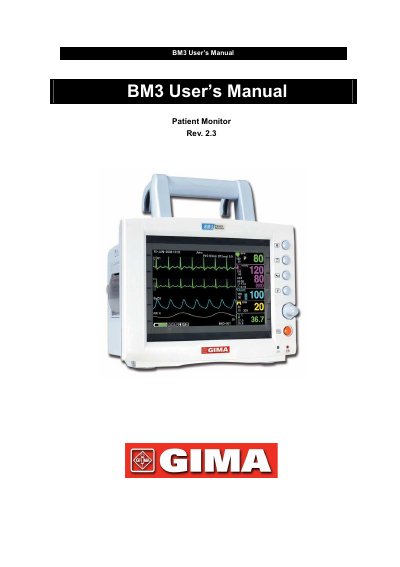
This is the user manual for the Philips BM3 patient monitor, designed for use in medical environments. It covers basic operation, patient data management, setup, and monitoring of vital signs including ECG, SpO2, respiration, NIBP, and temperature. The manual also includes troubleshooting guidance and technical specifications. The device supports battery operation, LAN connection, and uses a 7" TFT LCD screen.
| Operating Temperature | 10°C to 40°C (50°F to 104°F) |
|---|---|
| Storage Temperature | -10°C to 60°C (14°F to 140°F) |
| Humidity | 20% to 95% RH |
| Screen | 7" TFT LCD (800×480) |
| Battery | Li-ion battery |
| SpO2 Sensor | Red 660nm, 2mW (typical), Infrared 905nm, 2-2.4mW (typical) |
| Respiration Range | 5 to 120 breaths/min |
| NIBP Measurement Range | Systolic 60 to 250 mmHg, Mean Arterial Pressure 40 to 235 mmHg, Diastolic 30 to 220 mmHg |
| Temperature Accuracy | 25°C to 45°C ± 0.1°C, 15°C to 24°C ± 0.2°C |
The operating temperature range is 10°C to 40°C (50°F to 104°F).
The BM3 uses a Li-ion battery.
The BM3 has a 7" TFT LCD screen with a resolution of 800×480.
The SpO2 sensor uses red 660nm, 2mW (typical) and infrared 905nm, 2-2.4mW (typical).