
This manual introduces the working principle and use of magnetic powder clutch
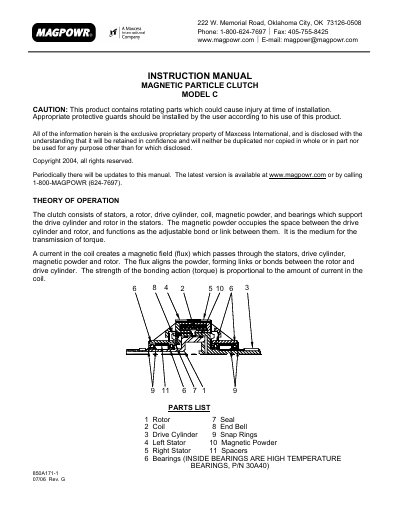
This manual provides detailed instructions for installing, operating, and maintaining the Magpowr C-type magnetic particle clutch. It includes parts lists, electrical connections, environmental specifications, current ratings, and troubleshooting steps. Maintenance is generally only required after extended service, and repair kits are available to restore the clutch to 'as new' condition. The document also covers disassembly and reassembly procedures for all models, with specific notes for variations like the C100 and C50. This manual is written in Chinese.
| Operating Temperature Range | 0°C to 40°C |
|---|---|
| Storage Temperature Range | -30°C to +80°C |
| Relative Humidity | 5% to 85% |
| Pollution Degree | 2 (IEC664-1) |
| Altitude | 0-2000 meters |
The operating temperature range is 0°C to 40°C.
Check the power supply voltage and replace or repair it if low. Overhaul the clutch using a repair kit if the magnetic powder has deteriorated or is lost.
The clutch bearings are likely worn. Overhaul the clutch using a repair kit.
High-temperature bearings, part number 30A40, are required.