
This application note describes the features of the ADV601JS12, ADV601LC and ADV611 and ADV612 video codecs and differences from the original ADV601.
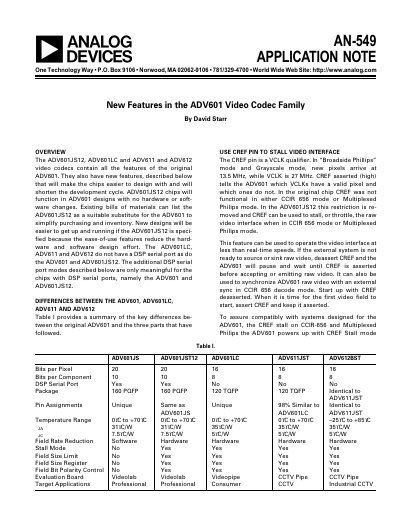
This document outlines the new features available in the ADV601JS12, ADV601LC, ADV611, and ADV612 video codec family members. These chips contain all features of the original ADV601 but offer improvements to simplify design and shorten development cycles. The ADV601JS12 is compatible with existing ADV601 designs, while the other models lack a DSP serial port.
| Bits per Pixel | 20 (ADV601JS12), 16 (ADV601LC, ADV611, ADV612) |
|---|---|
| Bits per Component | 10 (ADV601JS12), 8 (ADV601LC, ADV611, ADV612) |
| DSP Serial Port | Yes (ADV601JS12), No (ADV601LC, ADV611, ADV612) |
| Package Type | 160 POFP (ADV601JS12), 120 TOFP (ADV601LC, ADV611, ADV612) |
| Temperature Range | 0°C to +70°C (ADV601JS12, ADV601LC, ADV611), -25°C to +85°C (ADV612) |
Yes, the ADV601JS12 chips will function in ADV601 designs with no hardware or software changes.
The CREF pin can be used to stall or throttle the raw video interface in CCIR 656 mode or Multiplexed Philips mode.
If the New Cropping Mode Enable bit is set, the VSTART and VEND registers become field based rather than frame based.