
Agilent Application Note: Identification Quantification of Main Off-Flavors in Wine by GC/MS

This document describes a method for using GC/MS to analyze off-flavors in wine
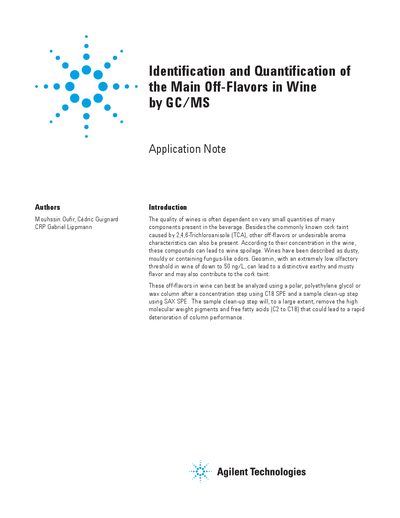

Agilent Application Note: Identification Quantification of Main Off-Flavors in Wine by GC/MS - cover page
Brand
Agilent
Document type
Application Note
Language
English
Pages
2
File format
PDF
File size
153 KB
Published
12 June, 2012
Updated
30 September, 2023
MD5 checksum
F9A92D905037DFE0A4A40A28174B8DBA

About this manual

The document outlines a method for analyzing undesirable aroma characteristics, such as cork taint caused by 2,4,6-Trichloroanisole (TCA), geosmin, and other compounds like (+)-fenchone and 2-methyl-iso-borneol. The analysis relies on specific sample preparation steps involving C18 SPE for concentration and SAX SPE for clean-up to remove high molecular weight pigments and free fatty acids.

What's inside

  • Introduction
  • Technique Conditions
  • Column Specifications
  • Sample Preparation
  • Peak Identification

Frequently asked questions

What is the lowest concentration of Geosmin that can cause an earthy and musty flavor in wine?

Geosmin can lead to a distinctive earthy and musty flavor at concentrations as low as 50 ng/L.

What sample size and solvent are required for the analysis?

The procedure requires a sample size of 5 ug/mL in Acetone.

What is the temperature range and ramp rate for the GC column?

The temperature increases from 70 °C to 240 °C at a rate of 5 °C per minute.

Download PDF (153 KB)

More Agilent Manuals


View all Agilent manuals →