
Clinical guide for ResMed Stellar 100/150 adult and paediatric ventilators, covering indications, therapy modes, setup, alarms, and troubleshooting.
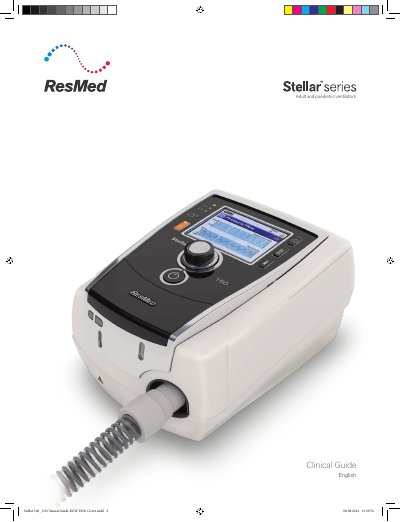
ResMed Stellar 100/150 is intended to provide ventilation for non-dependent, spontaneously breathing adult and paediatric patients (13 kg and above) with respiratory insufficiency or failure, with or without obstructive sleep apnoea. It can be used noninvasively or invasively with the ResMed Leak Valve, in stationary or mobile settings.
Stellar provides CPAP, S, ST/PS, T, PAC and iVAPS therapy modes; iVAPS is available on Stellar 150 for patients 30 kg and above. The guide covers setup, alarms, menus, iVAPS configuration, data management, cleaning, troubleshooting and technical specifications.
| Minimum patient weight | 13 kg and above |
|---|---|
| iVAPS patient weight indication | 30 kg and above |
| Maximum pressure support increase rate | up to 0.7 cm H2O/sec |
| Typical pressure support change per breath | does not exceed 3 cm H2O per breath |
Non-dependent, spontaneously breathing adult and paediatric patients (13 kg and above) with respiratory insufficiency or failure, with or without obstructive sleep apnoea.
iVAPS mode is only available on Stellar 150.
iVAPS is indicated for patients 30 kg and above.
Side effects may include drying of the nose, mouth or throat, nosebleed, bloating, ear or sinus discomfort, eye irritation and skin rashes.