
The Nautilus LifeLine user manual provides setup, operation, safety, testing and technical specifications for the maritime rescue GPS device.
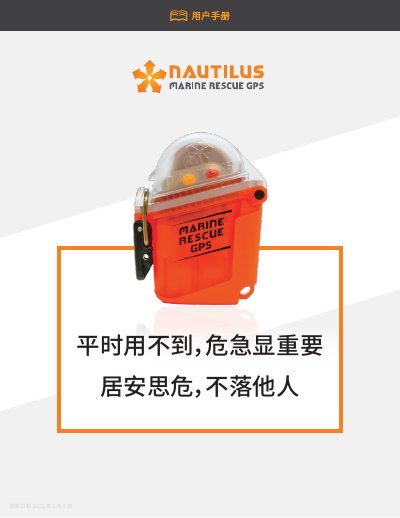
This manual covers the quick‑start guide, safety precautions, component description, and region‑specific configuration for the Nautilus LifeLine GPS rescue device. It explains how to install the antenna, power the unit, and use the Nautilus GPS mobile app for region and identification‑code settings.
Detailed sections describe the distress‑signal activation, test procedures, battery handling, waterproof maintenance, and the device’s technical specifications such as AIS/DSC power, frequency, operating temperature, waterproof depth, dimensions and weight. This manual is written in Chinese.
| AIS transmit power | 瓦 |
|---|---|
| AIS frequency | .和. MHz |
| DSC transmit power | .瓦 |
| DSC frequency | . MHz |
| Operating temperature range | -°C ~ +°C |
| Waterproof depth | feet ( meters) |
| Dimensions | . x . x . inches |
| Weight (with batteries) | . ounces |
The device must be equipped with two CR… V lithium batteries to operate.
Press and hold the red “H” button for the specified number of seconds to start sending a distress signal.
Hold the test button for the indicated time until the yellow LED begins flashing; the device will then send a position report.
The Nautilus LifeLine is rated for a waterproof depth of feet (approximately meters).