
A technical guide covering Moog electro-hydraulic valve types, operating principles, sizing guidance, and practical system layout considerations.
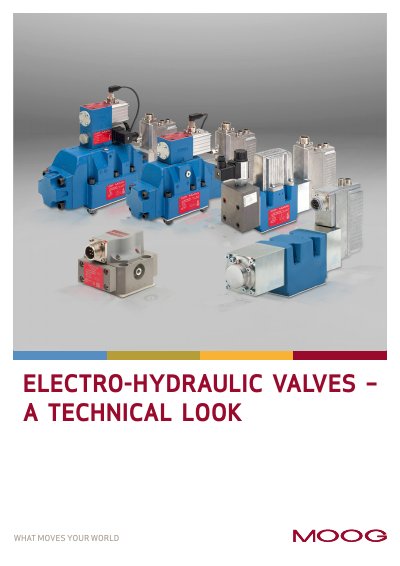
This document provides a comprehensive overview of Moog electro-hydraulic valves, explaining the differences between servo and proportional valves, as well as directly and pilot-operated designs. It details the features of electrical and mechanical feedback systems, including analog and digital control options.
The guide further covers operating principles such as nozzle flapper and linear force motor technologies, offers guidance on valve sizing for specific applications, and discusses practical considerations for laying out electro-hydraulic control systems.
| Servo valve spool overlap | <3% of the spool stroke |
|---|---|
| Proportional valve spool overlap | 3% or more |
| Servo valve rated flow pressure drop | 70 bar (1,000 psi) |
| Proportional valve nominal flow pressure drop | 10 bar (150 psi) |
The main difference is the spool overlap in the center position; servo valves have an overlap of less than 3%, while proportional valves have an overlap of 3% or more.
No, MFB valves do not need onboard electronics to operate as they use a feedback spring for closed loop position control.
They feature microprocessor-based controllers, spool/pressure/axis control, optional fieldbus interfaces, and error monitoring with valve setup via laptop.