
Dental implantation has become an excellent alternative to the loss or absence of teeth. However, dental implant surgery carries the risk of infection. To prevent infection, antibiotic prophylaxis (ABP) is commonly used. However, the use of ABP is controversial. This paper reviews the literature on the use of antibiotic prophylaxis in dental implants.
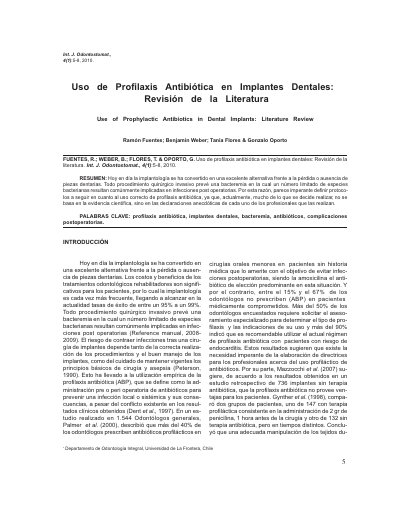
This article reviews prophylactic antibiotic use in dental implant surgery, noting that invasive surgical procedures involve bacteremia and that implantology has become a common alternative for missing teeth. It discusses conflicting clinical evidence, low documented correlation between antibiotic prophylaxis and implant failure, and the need for evidence-based guidelines. This manual is written in Spanish.
The article states that dental implants currently reach success rates between 95% and 99%.
More than 40% of general dentists prescribe prophylactic antibiotics in minor oral surgery for patients without a relevant medical history.
Amoxicillin is the predominant antibiotic of choice in this situation.
No significant difference in infection rate was found between the group that received prophylactic antibiotics and the group that did not.