
This is an automatic leveling instrument user manual, which contains product technical parameters, external structure, usage methods, measurement methods, instrument calibration and adjustment, instrument maintenance and maintenance.
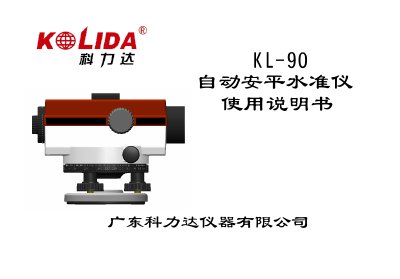
This manual is for the Kolida KL-90 automatic level. It describes the instrument's technical parameters, external structure, use, measurement methods, calibration and adjustment, maintenance, and packing list.
The described measurement methods include height difference, distance, and azimuth. Calibration covers the circular bubble and i-angle, and maintenance includes cleaning, storage, and handling of optical parts. This manual is written in Chinese.
| Model | KL-90 |
|---|---|
| Telescope magnification | 32X |
| Standard deviation per km (double run) | 1 mm |
| Leveling accuracy | ±0.3″ |
| Compensator working range | ±15′ |
| Telescope image | Upright |
| Objective lens diameter | 40 mm |
| Field of view | 1°20′ |
| Shortest sighting distance | 0.5 m |
| Stadia/additive constant | 100/0 |
| Circular bubble accuracy | 8′/2 mm |
| Horizontal circle graduation | 360° or 400 gon |
| Instrument dimensions | 195 mm × 135 mm × 140 mm |
| Instrument net weight | 1.4 kg |
Place the instrument between staffs A and B, read the middle wire at each point, and calculate h = a - b.
Aim at the staff, read the stadia interval e in centimeters; the distance to the staff equals e in meters.
Level the bubble, rotate the telescope 180 degrees, and adjust if the bubble does not remain centered.
Clean the instrument after use, protect optical surfaces, and store it in a dry, clean, ventilated place.