
This document is a user manual for the water quality testing instrument AND1000 Fluorescence Spectrophotometer, including the features and characteristics of the instrument, operation steps, new sample setup and management, maintenance, etc.
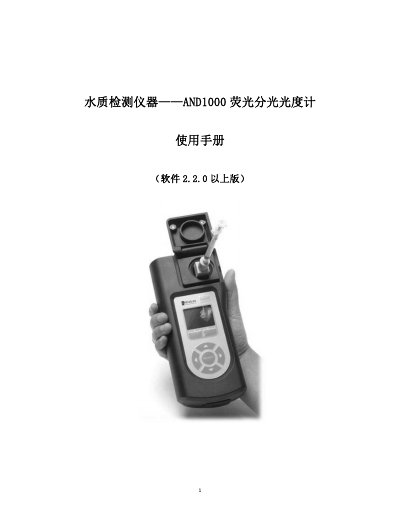
The AND1000 is a portable field testing instrument designed to detect heavy metal contaminants in water using fluorescent sensing technology. It utilizes proprietary catalytic DNA sensors that react with target pollutants like lead, uranium, copper, mercury, and zinc to produce fluorescence, allowing for quantitative results in parts per billion (ppb). The device simplifies the traditional testing process into two simple steps: mixing a 1ml water sample with a sensor test pack and inserting it into the instrument. This manual is written in Chinese.
| IP Rating | IP54 |
|---|---|
| Operating Temperature Range | 10 to 40°C (50 to 104°F) |
| Optimal Temperature Range | 20 to 30°C (68 to 86°F) |
| Relative Humidity Limit | < 80% |
| Sensor Shelf Life (Room Temp) | 1 year |
| Buffer Solution Shelf Life (Room Temp) | 6 months |
The device uses different colored sensor packs to test for lead, uranium, copper, mercury, and zinc.
The instrument automatically analyzes the sample and reports results within two minutes.
Samples with a pH less than 2 require neutralization before testing to ensure accurate results.