
SRM nickel-cadmium batteries are designed specifically for emergency power in various railway applications. They offer high reliability, a wide operating temperature range, highly competitive costs, low maintenance and independent power.
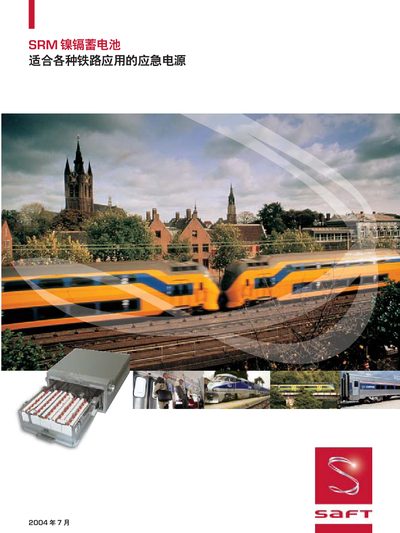
The SRM nickel‑cadmium battery is designed for railway emergency‑power use, offering high reliability, long life and a wide operating temperature range. The manual explains the patented sintered‑/plastic‑bonded electrode technology, the low water‑consumption design and the cost advantages over lead‑acid batteries.
It also details the mechanical characteristics, container options (stainless‑steel, plastic, flame‑retardant plastic), electrical performance, charging procedures and environmental commitments of Saft. Maintenance recommendations include a two‑year inspection interval and water addition only every two years. This manual is written in Chinese.
| Operating temperature range | -58 °F to +158 °F |
|---|---|
| Nominal cell voltage | 1.1 V per cell |
| Charging voltage | 1.05 V per cell |
| Water addition interval | Every 2 years |
| Weight of SRM 46 model | 2.9 kg (including container) |
The SRM battery can operate from –58 °F (–50 °C) up to +158 °F (+70 °C).
Water only needs to be added once every two years.
A full inspection and maintenance check is recommended every two years.