
Safety data sheet for sodium hydroxide providing hazard information, handling, storage, and emergency measures.
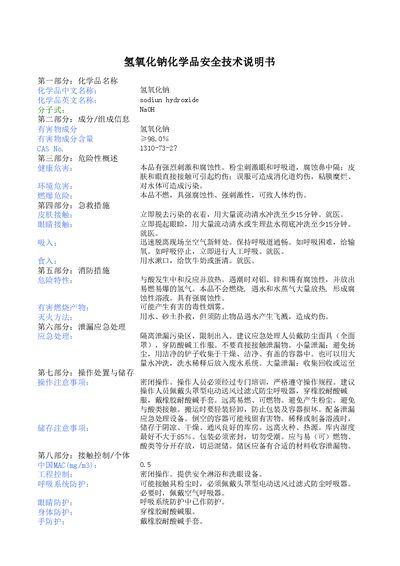
This document presents the chemical identification of sodium hydroxide (NaOH) and its hazardous properties, including strong corrosivity, health hazards, and environmental impact. It details the composition, purity (≥98.0%), and regulatory identifiers such as CAS No. 1310-73-2.
The sheet also outlines first‑aid measures, fire‑fighting instructions, accidental release procedures, safe handling and storage practices, personal protective equipment requirements, physical‑chemical properties, stability, transport guidelines, and disposal methods. This manual is written in Chinese.
| Molecular formula | NaOH |
|---|---|
| CAS number | 1310-73-2 |
| Purity | ≥98.0 % |
| Melting point | 318.4 °C |
| Boiling point | 1390 °C |
| Relative density (water = 1) | 2.12 |
| Ignition temperature | Not applicable |
Immediately remove contaminated clothing and rinse the skin with plenty of running water for at least 15 minutes, then seek medical attention.
Use water or sand to extinguish, but avoid splashing water onto the material as it can generate hydrogen gas and cause burns.