
Instructions for using SL1010 RIPA lysis buffer to lyse cultured cells and tissue samples for Western blot and immunoprecipitation.
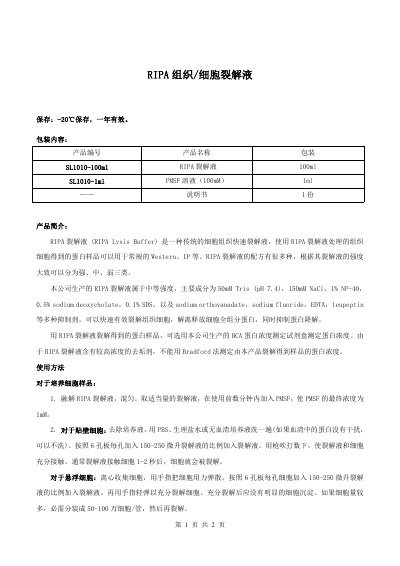
This two-page instruction sheet describes a medium-strength RIPA lysis buffer for rapid lysis of cultured cells and tissue samples. It lists package contents, composition, storage, and step-by-step lysis procedures.
The document also covers centrifugation conditions, lysis buffer volumes, protein assay compatibility, and precautions such as keeping samples on ice and avoiding repeated freeze-thaw cycles. This manual is written in Chinese.
| Storage | -20°C, one year |
|---|---|
| Composition | 50 mM Tris (pH 7.4), 150 mM NaCl, 1% NP-40, 0.5% sodium deoxycholate, 0.1% SDS, plus inhibitors |
| PMSF final concentration | 1 mM |
| Centrifugation | 10000-14000 g for 3-5 minutes |
| Cultured cell lysis volume | 150-250 µL per well of a 6-well plate |
| Tissue lysis volume | 150-250 µL per 20 mg tissue |
The BCA protein assay kit can be used; the Bradford method cannot be used because the buffer contains a high detergent concentration.
It is a normal complex containing genomic DNA and can usually be removed by centrifugation unless tightly DNA-bound proteins are being detected.
All lysis steps should be performed on ice or at 4°C.