
Cognex presents an image‑based ABH‑ID solution that boosts baggage tag read rates, reduces manual handling and meets IATA standards.
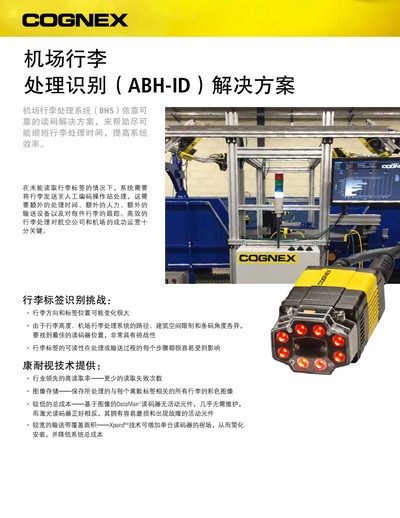
The ABH‑ID solution from Cognex uses image‑based DataMan 360 series readers and the MX‑1000 mobile terminal to reliably read damaged barcodes and QR codes on moving luggage. By capturing full‑color images of each tag, the system can diagnose read failures and provide visual evidence for training and quality control.
Key technologies include Hotbars® for reading severely damaged tags, Xpand™ optics that expand the field of view by more than 50 %, and a fast decoding engine that delivers sub‑second response times. The solution complies with the latest IATA 753 resolution, helping airlines reduce missed flights and improve passenger satisfaction. This manual is written in Chinese.
| Resolution options | 800 × 600, 1280 × 1024, 1600 × 1200 |
|---|---|
| Read rate | 60 reads per second |
| Maximum conveyor speed | 400 ft/min (2.0 m/s) |
| Mean Time Between Failures (MTBF) | 13 years |
| Field‑of‑view increase with Xpand™ | More than 50 % larger |
| Hotbars® capability | Reads severely damaged tags that laser scanners cannot |
The DataMan readers have an average MTBF of 13 years.
Yes, the image‑based readers can read QR codes, whereas laser scanners cannot.
Xpand™ expands the field of view by more than 50 %, allowing fewer readers to cover a larger belt area.
Yes, it complies with the IATA 753 resolution for safe baggage handling.