
Technical specifications and application information for Celduc SKA, SKL, and SKH solid state relays designed for high surge current loads.
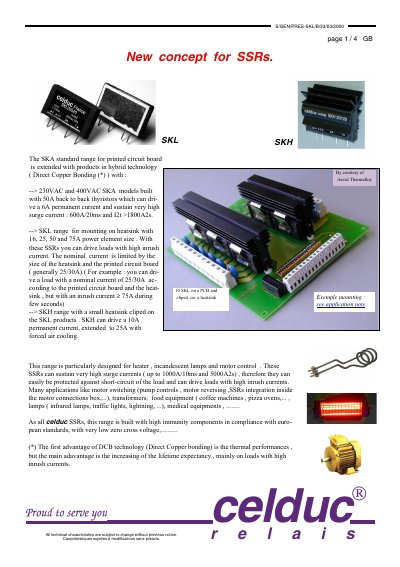
This document presents the Celduc SKA, SKL, and SKH range of Solid State Relays (SSRs), specifically designed for controlling heaters, incandescent lamps, and motors. The series is characterized by its ability to sustain very high surge currents, making it suitable for loads with high inrush currents such as transformers and electric discharge lamps.
The product line includes the SKA standard range for printed circuit boards, the SKL range designed for mounting on external heatsinks (16A to 30A), and the SKH range featuring an integrated small heatsink. The document details technical specifications including output voltage, current ratings, I2t values, control types, and input protection methods.
| Output Voltage Range (AC) | 12-275VAC to 24-600VAC |
|---|---|
| Maximum Surge Current (I2t) | up to 5000 A²s |
| SKH Permanent Current (with fan) | up to 25A |
| Control Type Options | Zero Cross or Random |
They are particularly designed for heater, incandescent lamps and motor control.
Yes, they can drive loads with high inrush current limited by the size of the heatsink and PCB.
The main advantages are improved thermal performances and increased lifetime expectancy.