
Floods can cause a variety of infectious diseases, especially intestinal infectious diseases and natural epidemic diseases.
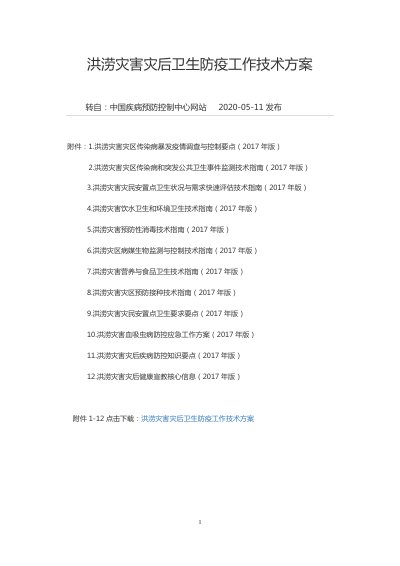
The document provides a comprehensive technical framework for health and epidemic prevention work in areas affected by flood disasters. It addresses the increased risk of infectious diseases due to damaged water systems, food insecurity, and disrupted living conditions. The plan emphasizes the importance of monitoring, rapid response, and implementing targeted control measures to prevent the spread of diseases such as cholera, dysentery, and leptospirosis. This manual is written in Chinese.
The plan highlights a focus on cholera, dysentery, typhoid, other infectious diarrhea, viral hepatitis (hepatitis A and E), epidemic hemorrhagic fever, leptospirosis, Japanese encephalitis, schistosomiasis, influenza, and epidemic hemorrhagic conjunctivitis.
The core principle is to control the epidemic in the shortest time within the smallest scope using measures like isolating patients, managing food and water, disinfecting, and health education.