
A vertical barrier is a wall installed underground to control the flow of groundwater. They can change the direction of flow of contaminated groundwater away from drinking water wells, wetlands or streams. They also contain and isolate contaminated soils and groundwater to prevent their mixing with clean groundwater.
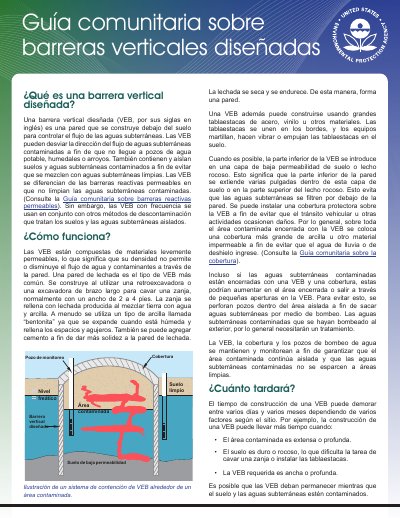
This document provides a community guide to Vertical Barrier Walls (VEBs), which are subsurface walls constructed to control groundwater flow. Unlike permeable reactive barriers, VEBs do not clean contaminated water but rather divert its flow away from drinking water wells, wetlands, and streams, or isolate contaminated soil and water to prevent mixing with clean groundwater. The most common type is a grout wall made of bentonite clay and soil, though steel or vinyl sheet piles can also be used. This manual is written in Spanish.
No, VEBs do not clean the water; they contain and isolate it to prevent it from spreading to clean areas.
Construction can take anywhere from several days to several months, depending on site factors like soil hardness and the size of the area.
Yes, the materials generally pose minimal risks, and they are effective at preventing contaminated water from flowing into clean areas.