
Seven verbal intervention strategies to help you intervene in the safest, most effective way possible.
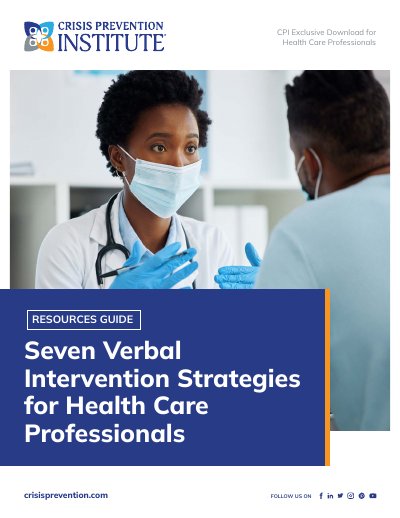
This resources guide from CPI (Crisis Prevention Institute) is aimed at health care professionals who deal with patients who are belligerent, hostile, or noncompliant. It explains that not all defensive behavior warrants a restrictive intervention and that verbal intervention is the least restrictive form of de-escalation to use first.
The guide presents seven principles: isolate the individual, remain calm, watch your body language, keep it simple, use reflective questioning, welcome silence, and practice the strategies repeatedly. It also includes bonus tips on paraverbals and reflective questioning, and encourages sharing and role-playing the tips with colleagues.
Onlookers such as hospital guests, other patients, and colleagues tend to add fuel to the fire, and the person may feel more uncomfortable and become harder to calm. Isolating the patient lets both of you focus on a calm verbal discussion.
Paraverbals are the tone, volume, and cadence of speech, all of which affect how a message is received. Using calm paraverbals reinforces a calm demeanor when a patient is escalating.
Silence gives the patient time to sort through their thoughts before restating their message. This often leads to clearer understanding of the true source of the patient's distress.
You put the patient's statements into your own words and repeat them back as a question, which lets them clarify their message and shows you are listening carefully.