
This is a guide to the use of low voltage busbar trunking systems
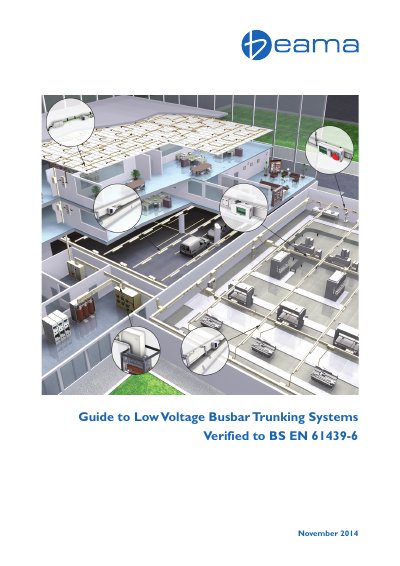
BEAMA’s guide explains low voltage busbar trunking systems verified to BS EN 61439-6. It provides an introduction to the requirements for these systems and describes how they should be safely installed and used in service.
The document covers useful definitions, distribution and feeder trunking runs, tap-off units, technical specifications, aluminium or copper conductor material, and installation and site testing. It also includes an appendix listing standards applicable to the design, installation and use of busbar trunking systems.
| Product standard | BS EN 61439-6:2012 |
|---|---|
| Conductor material options | Aluminium or copper |
| Tap-off unit types | Plug-in or fixed |
A busbar trunking system is an enclosed electrical distribution system comprising solid conductors separated by insulating materials.
Busbar trunking installations are categorised as distribution and feeder types.
Tap-off units can be plug-in or fixed.
The guide is verified to BS EN 61439-6.