
The quality and performance of marine diesel engine lubricating oil is critical to the performance and lifespan of the engine. The viscosity, flash point, TBN and other parameters of the lubricating oil need to be maintained within the range specified by the manufacturer to ensure the normal operation of the engine. The lubricating oil system of the engine is usually equipped with mechanical filter and centrifugal separator. Regular cleaning and replacement of the filter can ensure the quality of the lubricating oil.
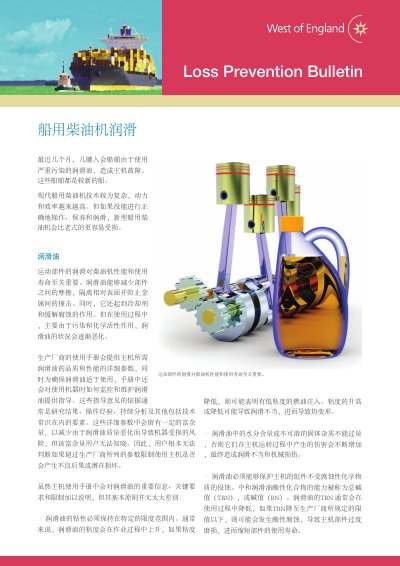
This is a West of England (West P&I) Loss Prevention Bulletin on lubricating marine diesel engines. It notes that several entered vessels suffered main engine damage after using heavily contaminated lubricating oil, and explains why modern, more highly rated marine diesel engines are more easily damaged when operation, maintenance and lubrication are not carried out correctly.
The bulletin sets out the basic requirements for lubricating oil - viscosity limits, water content and insoluble solids, total base number (TBN) and flash point - then describes mechanical filters, centrifugal filters and centrifugal separators/purifiers, onboard and laboratory testing of oil samples, contaminant analysis methods, engine room watchkeeping, and how to top up and change lubricating oil. This manual is written in Chinese.
| Separation temperature | Usually 85-95 °C |
|---|---|
| Separator flow rate | About 20% of the separator's rated capacity |
| Oil circulation through the separator | About 4-5 times per 24 hours |
| Centrifugal filter instead of separator | On smaller main engines with an oil tank below 750 liters |
| Wear particle size of concern | Above 20 microns |
Weekly, with the results recorded in the planned maintenance system.
It may indicate the presence of light hydrocarbons, which can mean the oil has been contaminated by diesel.
No. Because the densities are similar, diesel cannot be separated out by purification, so viscosity can only be effectively restored by partial or full oil replacement.
Contact the manufacturer for advice; a similar product made by the same manufacturer from the same base oil is usually acceptable.