
NCDENR Stormwater BMP Manual Chapter 18 Permeable Pavement

This is a technical manual on permeable pavement (also called green pavement), which introduces the characteristics, design, construction methods, and environmental impacts of permeable pavement on water quality, soil, vegetation, etc.

NCDENR Stormwater BMP Manual Chapter 18 Permeable Pavement - cover page
Category
Other
Document type
Other
Language
English
Pages
43
File format
PDF
File size
2.8 MB
Published
27 October, 2023
Updated
27 October, 2023
MD5 checksum
AAE86C21ECF62816053A5EEC5C139E2C

About this manual

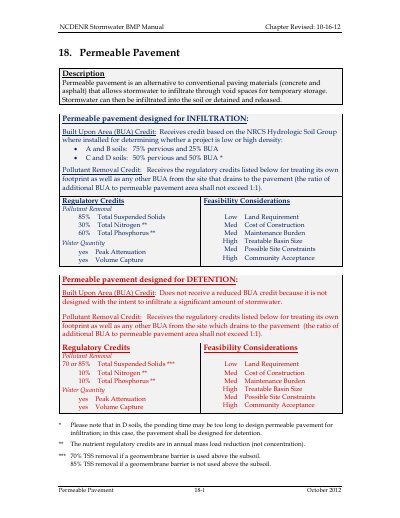
This manual chapter describes permeable pavement as an alternative to conventional paving materials that allows stormwater to infiltrate through void spaces for temporary storage. It details the regulatory credits available for pollutant removal and built-upon area reduction, depending on whether the system is designed for infiltration or detention.

What's inside

  • Description and Purpose
  • Regulatory Credit
  • Feasibility Considerations
  • Major Design Elements
  • Soil Suitability
  • Construction Requirements
  • Maintenance
  • Permeable Pavement Types

Frequently asked questions

What is the purpose of permeable pavement?

To control stormwater runoff quality and quantity while allowing pedestrian, parking, or traffic use.

What is the maximum ratio of additional BUA to permeable pavement area allowed?

The ratio shall not exceed 1:1.

What is the required minimum slope for the surface of permeable pavement?

The surface shall have a slope of ≤ 6%.

What is the required minimum distance between the seasonal high water table and the aggregate storage layer?

The SHWT shall be at least two feet below the base of the aggregate storage layer.

Download PDF (2.8 MB)

Also Manuals