
This document introduces Golden-winged Warbler habitats management techniques in Appalachian region
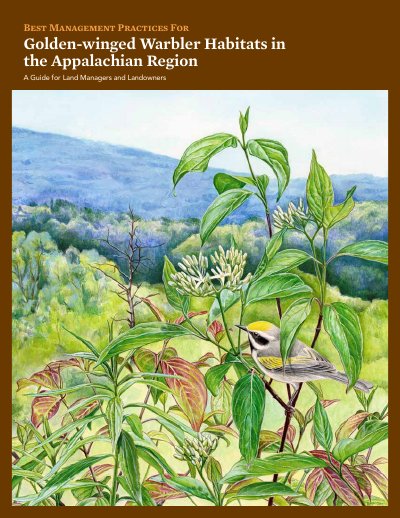
This guide provides habitat-specific strategies for land managers to develop and restore Golden-winged Warbler habitats in the Appalachian region. It includes six habitat supplements covering deciduous forests, minelands, abandoned farmlands, grazed forestland, utility rights-of-way, and forest and shrub wetlands. The guide emphasizes creating shrubby, young forest with herbaceous openings and widely spaced overstory trees. It also outlines population goals and habitat targets for the region, including a 40-year goal to double the population and prevent local extirpations.
The guide provides land managers and landowners with regional, habitat-specific strategies and techniques to begin developing and restoring habitat for Golden-winged Warbler.
The goal is to double the population within 40 years and prevent local extirpations.
Patches less than 1000 ft from existing breeding habitat should be at least 5 acres.