
Henkel LOCTITE Threadlocking User's Guide

It introduces the types, functions, application scenarios and usage methods of loktaite thread locking agent
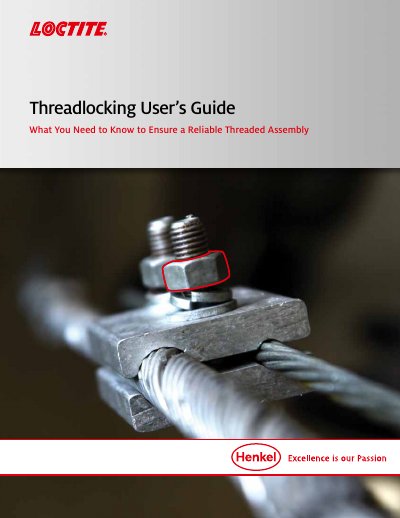

Henkel LOCTITE Threadlocking User's Guide - cover page
Brand
Henkel
Category
Industrial Supply
Document type
User Manual
Language
English
Pages
12
File format
PDF
File size
551 KB
Published
19 October, 2023
Updated
19 October, 2023
MD5 checksum
4D16535212C141C04D53777174FE570D

About this manual

This document serves as a user's guide for LOCTITE threadlocking solutions, explaining the functions of threaded assemblies and the benefits of using liquid anaerobic adhesives over traditional mechanical locking devices. It details how these products work to fill gaps and seal threads against corrosion and leakage.

What's inside

  • Threadlocking User's Guide
  • Functions of a threaded assembly
  • Why do threaded assemblies fail?
  • Locking Methods
  • Why use LOCTITE threadlockers?
  • How do I use a LOCTITE threadlocker?
  • LOCTITE threadlocking solutions
  • How does a LOCTITE threadlocker work?
  • LOCTITE threadlocker key selection factors
  • How to select the right LOCTITE threadlocker

Specifications

Cure Time (Low Strength)1.5 min. / 24 hrs.

Frequently asked questions

When should I use a LOCTITE primer?

Primers are recommended when assembling metal parts with inactive surfaces, such as plated parts, anodized aluminum, or titanium, to ensure proper performance.

What is the difference between Low and High Strength threadlockers?

Low Strength is ideal for fasteners under 1/4 inch for easy disassembly, while High Strength is designed for 1/4 to 3/4 inch fasteners and may require heat or hand tools for removal.

Can LOCTITE threadlockers be used on plastic assemblies?

Yes, specific products like LOCTITE 425 Assure are designed for plastic-to-plastic and plastic-to-metal applications.

Download PDF (551 KB)

More Henkel Manuals


View all Henkel manuals →