
This manual covers the recommendations for the installation, operation and maintenance of three-phase encapsulated low voltage transformers. It is emphasized that these abbreviated instructions should be used in conjunction with all local and National codes and should be referenced accordingly.
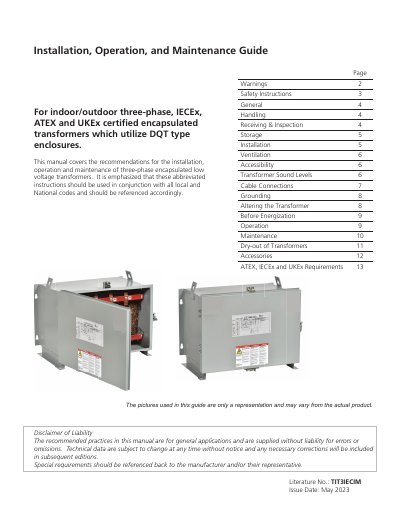
This guide provides safety instructions and procedures for installing, operating, and maintaining TIT's encapsulated dry-type transformers. It emphasizes compliance with local codes, NFPA 70E, and CSA Z462 standards. Key safety precautions include using qualified personnel, disconnecting power before work, and avoiding modifications. The guide also covers handling, inspection, grounding, and hazardous location requirements.
Installation must follow manufacturer guidelines and local electrical codes. Transformers should be lifted using provided lugs, inspected for transit damage, and stored upright. Operation requires adherence to nameplate ratings and safety protocols to prevent electric shock, explosion, or arc flash hazards.
Only qualified electrical personnel should install, operate, service, or maintain this equipment.
Work must comply with NFPA 70E and CSA Z462, and use appropriate PPE.
No modifications are permitted as they void the warranty and may create hazardous situations.