
This is a manual for a car diagnostic tool, which can be used to view the vehicle's fault codes and perform tests on the vehicle
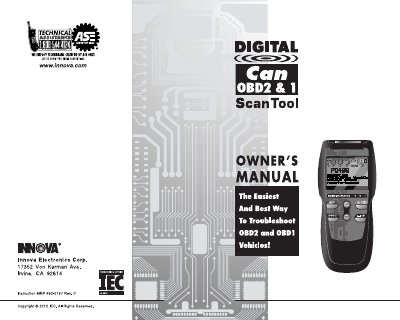
This manual guides users through using the CanOBD2&1 scan tool to retrieve diagnostic trouble codes (DTCs) and view live data for OBD1 and OBD2 systems. It covers safety precautions, battery installation, language and unit settings, and step-by-step procedures for different vehicle makes including Chrysler, Ford, GM, and Toyota. The tool also supports enhanced DTCs for specific manufacturers and includes features like Freeze Frame data and I/M Readiness testing for OBD2 systems.
The Enhanced CanOBD2&1 Scan Tool is designed to work on most Chrysler, Ford, GM and Toyota OBD1 systems and all OBD2 compliant vehicles. OBD1 was designed to monitor manufacturer-specific systems on vehicles built from 1981 to 1995. Then came the development of OBD2, which is on all 1996 cars and light trucks sold in the United States. These systems are part of a government mandate to lower vehicle emissions.
Connect the CanOBD2&1 Scan Tool to the vehicle’s test connector. Turn the ignition key "On.” Press the POWER/LINK button.
Always read your vehicle's service manual and follow its safety precautions. Operate the vehicle ONLY in a well-ventilated area. Wear approved safety eye protection. Keep a safe distance from moving parts. Avoid contact with hot engine parts. Ensure the parking brake is engaged and transmission in park or neutral before starting an engine. Turn the ignition OFF before connecting or disconnecting the tool.