
Massachusetts Residential Guide to Solar Electricity

This guide provides information on installing solar panels on homes in Massachusetts. It covers the installation process, available incentives, and other relevant information.
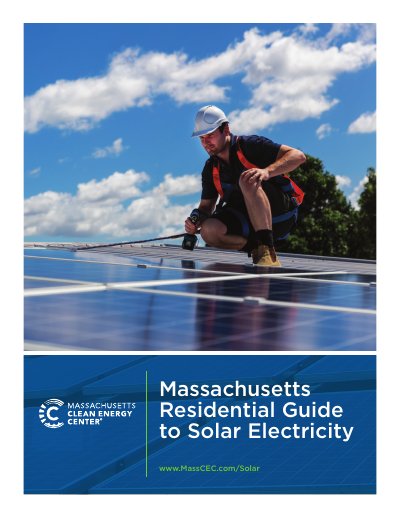

Massachusetts Residential Guide to Solar Electricity - cover page
Category
Other
Document type
Other
Language
English
Pages
32
File format
PDF
File size
12.4 MB
Published
16 October, 2023
Updated
16 October, 2023
MD5 checksum
3FCF3AEBC5B60EC52477E4C1C9033F69

About this manual

Published by the Massachusetts Clean Energy Center (MassCEC), this guide is intended to assist residents considering installing solar on their homes. It helps determine if a solar electric system is right for them, both technically and economically, while focusing primarily on residential-scale grid-connected projects. The document also notes that additional resources for commercial entities are available on the MassCEC website.

What's inside

  • Solar Electricity Today
  • Solar Electric System Components
  • Sizing and Optimizing a Solar Electric System
  • Important Regulations
  • Ownership Options and Incentives
  • What to Look For in a Contract
  • Environmental Benefits of Solar Electricity
  • Battery Energy Storage
  • Solar Installation Process
  • Buying or Selling a Home with Solar

Frequently asked questions

How long are solar electric panels expected to last?

Solar electric systems are designed to produce electricity for at least 20 years.

What percentage of their original output will solar panels still have after 20 years?

By year 20, the panels will still produce at least 80% of the electricity originally produced.

How much electricity does a typical residential solar system in Massachusetts generate annually?

A 7 kW system will produce roughly 7,700 kWh of electricity per year.

Download PDF (12.4 MB)

Also Manuals