
This document describes how to use the clock to position tools and stones for sharpening dental instruments.
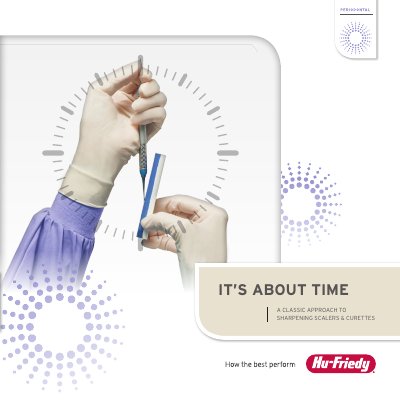
This manual describes a classic technique for sharpening periodontal scalers and curettes, utilizing visual imagery of clock hands to establish correct positions while holding the instrument stationary. This alternative method replaces traditional reliance on "degrees of angulation" with simple visual cues.
The guide covers why instruments must be kept sharp to reduce fatigue and improve patient comfort, how to determine sharpness using test sticks or visual inspection, and details on various sharpening stones including Arkansas, Ceramic, and India stones. It also provides instructions on stone care, proper work area setup, and the specific procedure for holding both the instrument and the stone.
| Recommended lubricant for Arkansas Stone | Oil |
|---|---|
| Lubrication for Ceramic Stone | Water or Dry |
| Recommended lubricant for India Stone | Oil, Water, or Dry |
A hard acrylic test stick will produce a metallic clicking sound when a sharp edge bites into it, whereas a dull edge will slide over the surface.
Sharp instruments reduce clinician fatigue, improve deposit removal, save time, enhance tactile sensitivity, and minimize patient discomfort.
Instruments should be replaced if the original shape has been significantly altered or if the strength and integrity of the blade have been compromised after sharpening.