
Key facts
- Manuals
- 1
- Languages
- EN
- Last added
- 2023-10-16
Featured Hu-Friedy manuals
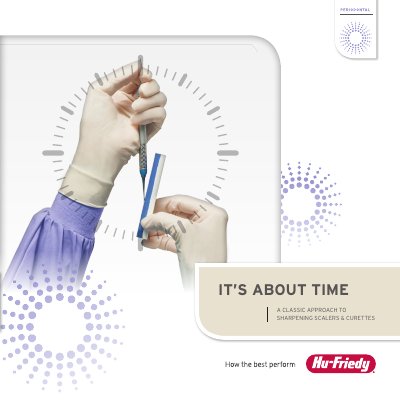
Hu-Friedy Periodontal Instrument Sharpening Guide
This manual describes a classic technique for sharpening periodontal scalers and curettes, utilizing visual imagery of clock hands to establish correct positions while holding the instrument stationary. This alternative method replaces traditional reliance on "degrees of angulation" with simple visual cues.
The guide covers why instruments must be kept sharp to reduce fatigue and improve patient comfort, how to determine sharpness using test sticks or visual inspection, and details on various sharpening stones including Arkansas, Ceramic, and India stones. It also provides instructions on stone care, proper work area setup, and the specific procedure for holding both the instrument and the stone.
Covers: Learning Objectives · Why Sharpen · How to Determine Sharpness · Sharpening Stones · Stone Grits & Lubrication · Stone Care
Latest Hu-Friedy manuals
Hu-Friedy Periodontal Instrument Sharpening Guide
User Manual 28 pages · 2.8 MB · ENA classic approach to sharpening periodontal scalers and curettes using the clock method instead of traditional angulation degrees.
Which document do I need?
User Manual
Day-to-day operation, settings and troubleshooting. Start here if the product is already set up.
Questions answered in Hu-Friedy manuals
How do you determine if a blade is sharp?
A hard acrylic test stick will produce a metallic clicking sound when a sharp edge bites into it, whereas a dull edge will slide over the surface.
What is the primary benefit of using sharp instruments?
Sharp instruments reduce clinician fatigue, improve deposit removal, save time, enhance tactile sensitivity, and minimize patient discomfort.