
This is a combustible gas detector that can be used to detect gasoline, propane, natural gas, and diesel fuel leaks.
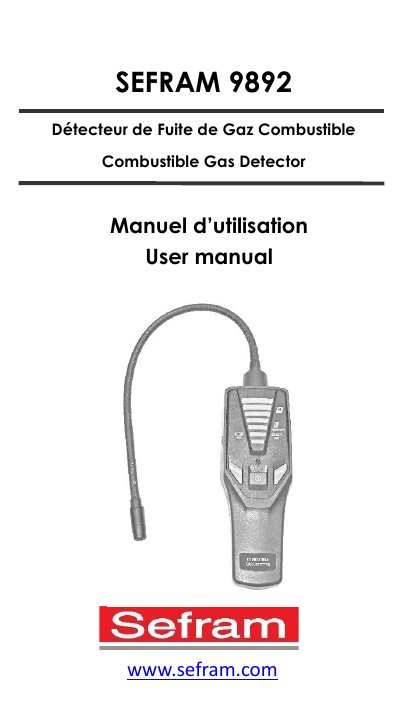
This manual provides instructions for the SEFRAM 989 2 Combustible Gas Detector, a handheld device designed to detect leaks of gasoline, propane, natural gas, or fuel oil. It features a microprocessor-controlled semiconductor sensor, a flexible stainless steel probe, and a tricolor LED indicator for visual alarms. The device is suitable for general use in environments where flammable gases are present, such as automotive exhaust systems, heating systems, and marine fuel tanks.
The guide details the startup procedure, including battery installation and automatic ambient concentration reset. It explains how to adjust sensitivity between High and Low settings to locate leak sources accurately. The manual also covers the installation of new sensors, noting that the sensor has a limited operative period and should be replaced periodically. Finally, it provides cleaning instructions for the plastic housing and warnings regarding the use of solvents that may damage the sensor. This manual is written in French.
| Detectable Gases | Gasoline, propane, natural gas or fuel oil |
|---|---|
| Alarm Method | Buzzer, Tricolor LED indicator |
| Sensitivity | Variable, starting from 5 ppm |
| Power Supply | 4 AA Alkaline batteries (6V DC) |
| Probe Length | 40 cm |
| Dimensions | 221 x 74 x 47 mm |
| Battery Life | Approximately 40 hours |
| Operating Temperature | 0 ~ 40 °C |
| Storage Temperature | -10 ~ 60 °C |
| Altitude | < 2000M |
The detector is designed to detect gasoline, propane, natural gas, or fuel oil.
The battery life is approximately 40 hours for normal use.
No, although it responds to high levels of carbon monoxide, it should not be used for CO detection in normal atmospheres.