
HMC234C8 GaAs MMIC SMT HIGH ISOLATION SPDT SWITCH, DC - 8.0 GHz is a high performance GaAs MMIC SMT high isolation SPDT switch with isolation of 52 dB and insertion loss of less than 2 dB, ideal for telecom infrastructure, microwave radio and VSAT, military radios, radar and ECM, test instrumentation.
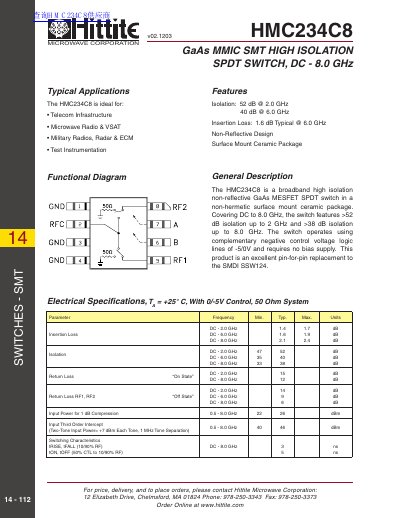
The HMC234C8 is a broadband high isolation non-reflective GaAs MESFET SPDT switch in a non-hermetic surface mount ceramic package. It covers the frequency range from DC to 8.0 GHz and features greater than 52 dB isolation up to 2 GHz and greater than 38 dB isolation up to 8.0 GHz. The device operates using complementary negative control voltage logic lines of -5/0V and requires no bias supply.
| Frequency Range | DC - 8.0 GHz |
|---|---|
| Isolation (DC - 2.0 GHz) | >52 dB |
| Isolation (DC - 6.0 GHz) | >40 dB |
| Insertion Loss (Typical @ 6.0 GHz) | 1.6 dB |
| Control Voltage Logic | -5/0V |
| Operating Temperature | -40 to +85 °C |
| Package Type | Surface Mount Ceramic |
The HMC234C8 is ideal for Telecom Infrastructure, Microwave Radio & VSAT, Military Radios, Radar & ECM, and Test Instrumentation.
No, the switch requires no bias supply.
The absolute maximum rating for RF Input Power is +30 dBm at +50 °C.