
This document is a user manual for the automatic external defibrillator DDU-100 AED. It provides information on the structure, indications, contraindications, and training required for operation of the Defibtech DDU-100 AED. It also includes important warnings, installation instructions, usage guidelines, maintenance, and troubleshooting.
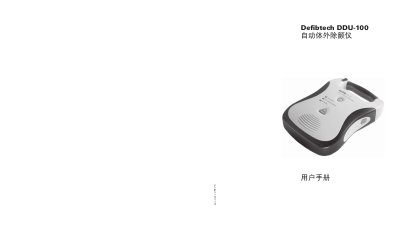
This manual introduces the Defibtech DDU-100 Automatic External Defibrillator, describing its compact design, two‑button interface, and built‑in event recording. It outlines the intended use, contraindications, required training, and safety warnings such as electrical shock, fire, and improper installation.
The guide details installation of the battery pack and data card, connection of self‑adhesive electrodes, operation sequences for patient analysis and shock delivery, routine maintenance, troubleshooting, and technical specifications. Contact information for service and regional distributors is also provided. This manual is written in Chinese.
| Dimensions | 8.5 x 11.8 x 2.7 inches (22 x 30 x 7 cm) |
|---|---|
| Weight (with DBP-1400 battery) | 4.2 lbs (1.9 kg) |
| Operating Temperature | 0 – 50 °C (32 – 122 °F) |
| Storage Temperature | 0 – 50 °C (32 – 122 °F) |
| Relative Humidity | 5 % – 95 % (non‑condensing) |
| Altitude Range | -500 to 15,000 ft (-150 to 4500 m) |
| Ingress Protection | IP53 / IP54 |
| Maximum Adult Defibrillation Energy | 150 J |
The manual warns of hazards such as electrical shock, fire, explosion, improper installation, and misuse, stating Defibtech is not liable for accidents caused by incorrect handling.
Insert the battery pack into its socket until a click is heard, then install a 9 V lithium auxiliary battery in the designated compartment, ensuring correct polarity.
When using adult electrodes, the AED can deliver up to 150 joules of energy to a 50 Ω load.