
This article mainly introduces the difference between mains frequency machine and high-frequency machine, and analyzes the function of mains frequency machine output isolation transformer in detail.
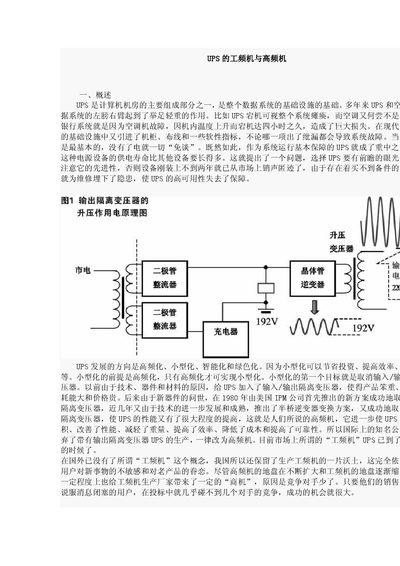
This document explains the differences between low‑frequency (工频机) and high‑frequency (高频机) UPS systems. It describes why traditional UPS used output isolation transformers, the role of those transformers, and why modern high‑frequency designs can eliminate them.
The guide also discusses the impact of transformer removal on size, efficiency, reliability, and power factor correction, providing circuit‑level insights for engineers and system planners. This manual is written in Chinese.
| Output voltage (AC) | 220 V |
|---|---|
| Peak output voltage | 620 V |
| Battery voltage (example) | 192 V |
| Required inverter input voltage | 650 V–870 V |
| Zero‑line isolation function | Provides separate neutral line |
It steps up the voltage to the required peak level and provides isolation for the neutral line.
No, high‑frequency UPS uses an electronic boost converter instead of a conventional transformer.
Eliminating the bulky isolation transformer reduces weight, loss, and cost while allowing higher switching frequencies.