
Key facts
- Manuals
- 1
- Languages
- EN
- Last added
- 2023-10-20
Featured hipot.com manuals
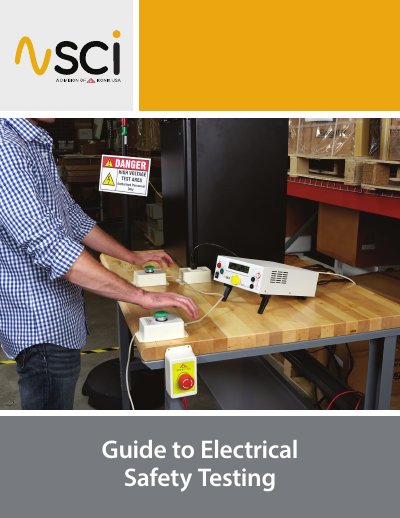
hipot.com Electrical Safety Testing User Manual
This guide explains why electrical safety testing is essential for product safety, quality, cost control, and liability prevention. It covers operator safety training, including hazard recognition, PPE requirements, and safe workstation setup. It also details test station configurations, safety interlocks, and protective measures like dual remote palm switches and insulation mats to prevent electric shock during high-voltage testing.
The document includes safety standards from NRTLs (UL, TUV, CSA, ETL, CCC), OSHA guidelines for high-voltage training, and NFPA 70E requirements for approach distances and personal protective equipment. It emphasizes the importance of not taking shortcuts and using proper procedures to ensure operator safety during electrical safety tests.
Covers: Why Test? · Operator Safety and Training · Setting up a Safe Workstation · Important Information Regarding ESD Stations · Additional Methods for Test Safety
Latest hipot.com manuals
hipot.com Electrical Safety Testing User Manual
User Manual 24 pages · 4.8 MB · ENUser manual for electrical safety testing procedures, operator safety, and test station setup guidelines.
Which document do I need?
User Manual
Day-to-day operation, settings and troubleshooting. Start here if the product is already set up.
Questions answered in hipot.com manuals
Why should I test my products for electrical safety?
To ensure the product is not hazardous to the end user, detect workmanship defects, control costs by identifying production problems early, and prevent product liability suits.
What are the two main types of electrical safety testing?
Type Test (laboratory or prototype test) detects design defects, while Production Line Test (100% of products) detects manufacturing defects.