
A surgical technique guide for the Zimmer Biomet Crosslock Distal Radius Plate, covering plate sizing, incision, dissection, and fixation methods for distal…
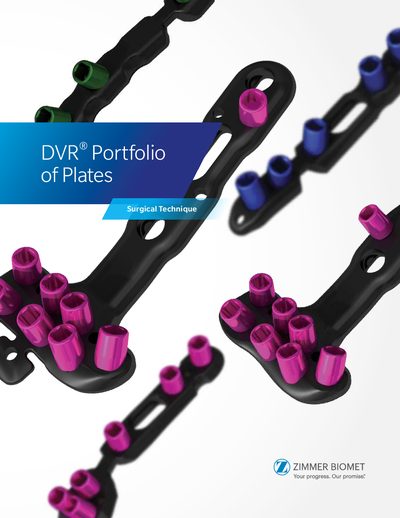
This document details the surgical procedure for treating distal radius fractures using the DVR® Crosslock System. It describes an advanced anatomic design featuring a low-profile plate with intersecting proximal and distal pegs to support the articulating surface. The guide emphasizes key steps such as identifying the watershed line, elevating the pronator quadratus muscle, and utilizing F.A.S.T. Guide inserts for accurate drilling of fixed-angle locking screws.
| Intended Use | fixation of fractures, malunions and osteotomies involving the distal radius |
|---|
Contraindications include active infection, conditions retarding healing like blood supply limitations or previous infections, insufficient bone quantity/quality, and cases where implants would cross open epiphyseal plates.
No, it is not required to remove the F.A.S.T. Guide inserts to sterilize the plate.
Do not open the volar wrist capsule, as doing so may cause devascularization of fracture fragments and destabilization of ligaments.