
This document explains the clinical significance of measuring nucleated red blood cells (NRBC) using the Sysmex XN-Series, highlighting its advantages over…
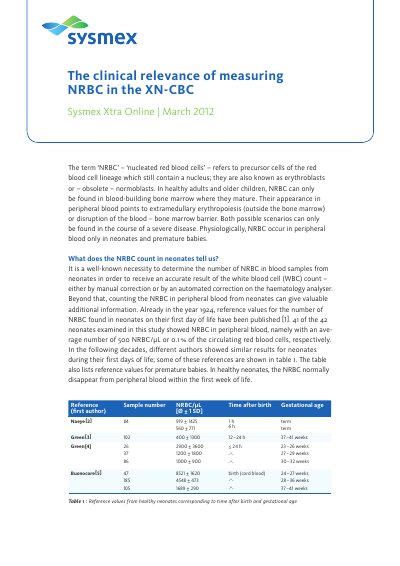
The document discusses the clinical relevance of counting nucleated red blood cells (NRBC), also known as erythroblasts. In healthy adults and older children, NRBC in peripheral blood indicates severe disease or bone marrow disruption, while they are physiologically normal only in neonates and premature babies. Accurate counts help diagnose conditions like anaemia, leukaemias, and assess mortality risk.
The text details the limitations of manual counting and flow cytometry, noting that manual methods are prone to error due to confusion with lymphocytes, and flow cytometry is expensive and time-consuming. In contrast, the Sysmex XN-Series allows for routine, accurate NRBC measurement as part of a complete blood count (XN-CBC) without increasing analysis time or requiring reflex tests.
| Measurement Range | low and high measurement ranges |
|---|---|
| Result Types | absolute (NRBC#) and relative values (NRBC%,/100 WBC) |
| Manual Count Variation | average coefficient of variation of 40% (20–110%) |
In healthy adults and older children, they indicate severe disease. In neonates and premature babies, they occur physiologically but should disappear within the first week of life.
It is expensive, time-consuming, and requires well-trained personnel, making it unsuitable for routine use.