
User manual for Showa Denki's Troubleresa Ⅱ PLUS malfunction detector for rotating machinery, covering setup, threshold settings, monitoring, and safety…
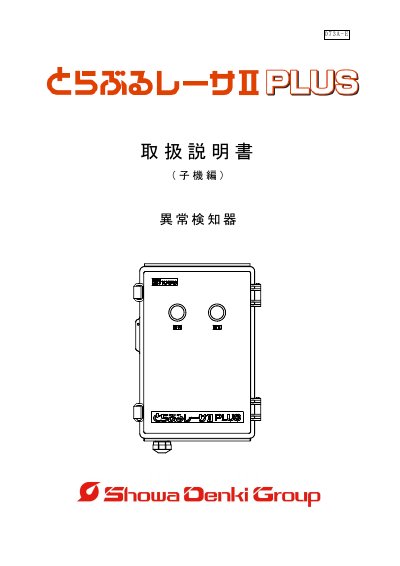
This manual provides instructions for installing, configuring, and operating the Troubleresa Ⅱ PLUS malfunction detector for rotating machinery. It includes safety warnings, threshold settings, installation guidelines, monitoring procedures, and troubleshooting. The device is designed to detect abnormalities in rotating equipment and alert users, but does not diagnose or resolve issues. Proper installation and maintenance are required for safe operation.
The manual is intended for users with knowledge of rotating machinery and its maintenance. It covers communication with Showa Denki’s parent unit, sensor installation, environmental requirements, and handling precautions. It also includes specifications, warranty information, and contact details for support. This manual is written in Japanese.
| Communication Requirement | Requires communication with Showa Denki's parent unit |
|---|
It is a malfunction detector for rotating machinery that alerts users to abnormalities but does not diagnose or resolve issues.
The device is designed to detect and notify users of abnormalities that cause failures in rotating machinery, but it does not have functions to avoid or solve those abnormalities.
Installing the sensors requires specialized knowledge in both electrical and rotating machinery, and this work must be performed by a qualified technician.
When an abnormality is detected, you should stop the operation of the rotating machinery as soon as possible and take necessary measures.