
This manual covers the usage, operation, calibration, and maintenance of a pH composite electrode for measuring water solution pH values.
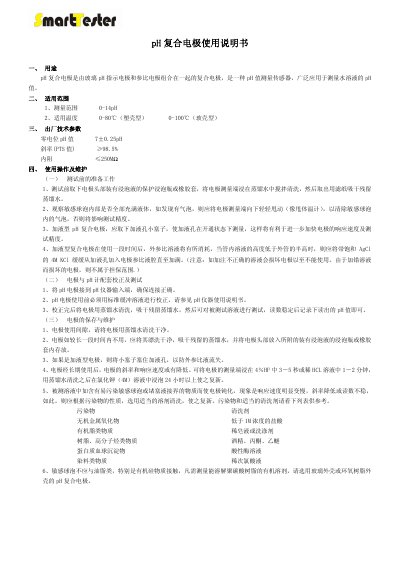
The document describes the pH composite electrode as a sensor combining a glass pH indicator electrode and a reference electrode. It details the electrode's application in measuring water solution pH values and lists its specific operating temperature ranges and electrical parameters such as zero potential, slope, and internal resistance.
The guide provides step-by-step instructions for preparation before testing, including cleaning and removing air bubbles. It explains how to connect the electrode to a pH meter, perform calibration using standard buffer solutions, and conduct measurements. Additionally, it outlines procedures for long-term storage and maintenance, including cleaning methods for various contaminants and regeneration techniques using specific chemical solutions. This manual is written in Chinese.
| Measurement Range | 0-14pH |
|---|---|
| Applicable Temperature (Plastic Shell) | 0-80℃ |
| Applicable Temperature (Glass Shell) | 0-100℃ |
| Zero Potential pH Value | 7±0.25pH |
| Slope (PTS Value) | ≥98.5% |
| Internal Resistance | ≤250MΩ |
Remove the protective soaking bottle or rubber sleeve, immerse the electrode tip in distilled water with stirring, then wipe off the residual water with filter paper.
Hold the electrode with the measurement end down and shake it gently to remove the bubbles, similar to shaking a clinical thermometer.
When the solution level in the outer tube drops below half the height, add saturated AgCl 4M KCl solution through the filling hole until full.