
An introductory guide to Markforged's Carbon Fiber Reinforcement (CFR) technology, explaining material types, advantages, and implementation strategies for…
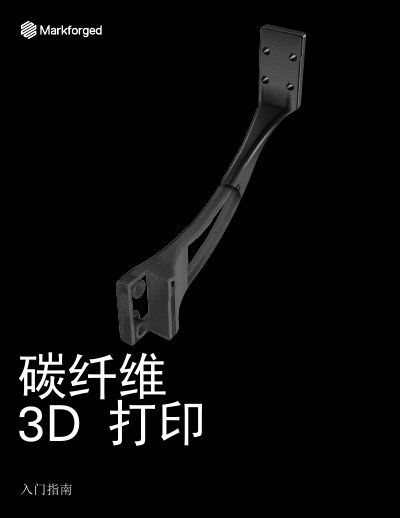
This document serves as an introductory guide to carbon fiber 3D printing, explaining the basics of carbon fiber, different types of carbon fiber materials used in 3D printing (such as short fiber-filled filaments and continuous fiber reinforcement), their advantages, challenges, and implementation considerations. It also highlights the benefits of Markforged's Carbon Fiber Reinforcement (CFR) technology, which allows for enhanced strength, stiffness, and precision in 3D printed parts.
The guide details the differences between short fiber-filled filaments and continuous fiber reinforcement, noting that continuous fiber can achieve strength comparable to 6061-T6 aluminum. It covers various reinforcement strategies such as sandwich panels, shells, and strips, and explains how users can dynamically control fiber content in specific layers to optimize part performance. This manual is written in Chinese.
| Fiber Diameter | 5-10 micrometers |
|---|---|
| Short Fiber Length | 50-250 micrometers |
| Fiber Weight Percentage | 5% to 35% |
| Comparable Material Strength | 6061-T6 Aluminum |
The two main types are short fiber-filled filaments and continuous fiber reinforcement (CFR).
It allows tensile and bending loads to be applied directly to the long fiber bundles, minimizing the load on the base polymer.
Yes, continuous carbon fiber reinforced printed parts can replace machined parts in practical applications due to their comparable strength.