
This datasheet details the properties, application, and performance specifications of Loctite 577, a medium-strength anaerobic threadlocker for plastic and…
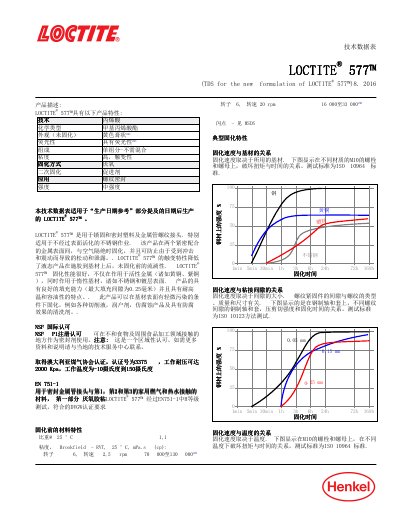
Loctite 577 is a single-component, high-viscosity, thixotropic anaerobic adhesive designed for locking and sealing plastic and metal pipe thread joints. It is particularly suitable for stainless steel applications without surface activation and cures in the absence of air between closely fitting metal surfaces. The product offers good gap-filling capabilities (up to 0.25 mm), heat resistance, and oil resistance, and can cure even on surfaces with minor contamination such as cutting fluids or rust inhibitors. This manual is written in Chinese.
| Chemical Type | Acrylic |
|---|---|
| Appearance (Uncured) | Yellow paste |
| Composition | Single component - no mixing required |
| Viscosity | High, thixotropic |
| Curing Method | Anaerobic, secondary cure |
| Application | Thread sealing |
| Specific Gravity @ 25°C | 1.1 |
| Flash Point | See MSDS |
| Tensile Strength (ISO 37) | 1.3 N/mm² |
| Tensile Modulus (ISO 37) | 168 N/mm² |
| Specific Heat | 2.0 kJ/(kg·K) |
| DVGW Certification | EN 751-1 H Grade |
It is an acrylic methyl methacrylate type adhesive.
Yes, it is particularly suitable for stainless steel operations without surface activation.
The product has good gap-filling ability with a maximum gap of 0.25 mm.