
Guidelines for safe intravenous magnesium sulfate dosing, dilution, and administration in pediatric patients at Leeds Teaching Hospitals.
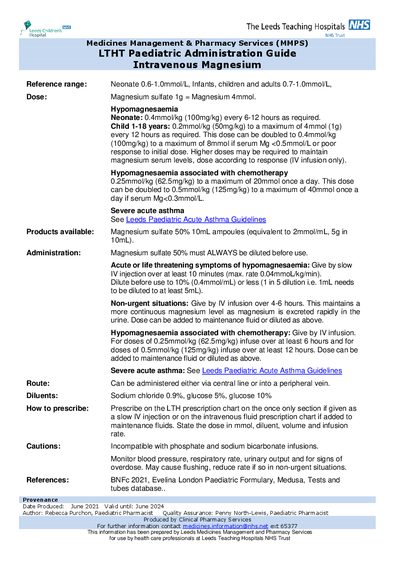
This guide provides pediatric dosing ranges, dilution requirements, and administration methods for intravenous magnesium sulfate. It includes reference ranges for neonates, infants, children, and adults, as well as specific dosing adjustments for hypomagnesaemia and chemotherapy‑related cases.
The document also outlines prescribing instructions, compatible diluents, cautions such as incompatibility with phosphate or sodium bicarbonate, and monitoring recommendations. It references the Leeds Paediatric Acute Asthma Guidelines and relevant formularies for further clinical support.
The reference range for neonates is 0.6 – 1.0 mmol/L.
Give by slow IV injection over at least 10 minutes (max rate 0.04 mmol/kg/min).
Sodium chloride 0.9 %, glucose 5 % or glucose 10 % can be used as diluents.
Magnesium sulfate is incompatible with phosphate and sodium bicarbonate infusions and requires monitoring of blood pressure, respiratory rate, and urine output.