
The Keya Electronics KYDBL2430-2E Smart Controller User Manual provides installation, wiring, operation, and safety instructions for controlling brushed DC…
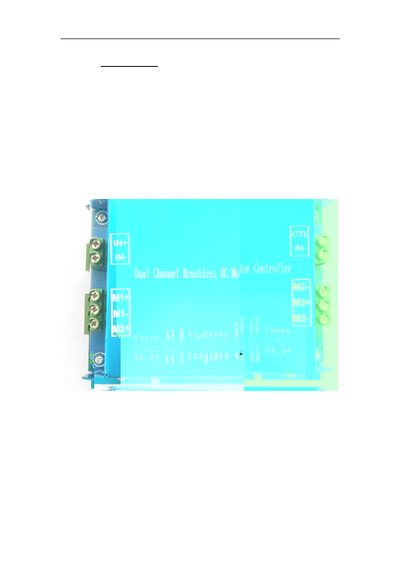
The KYDBL2430-2E is an intelligent brushed‑DC‑motor controller capable of driving up to three motors with independent or synchronized control modes. It supports multiple control signals such as wireless remote, joystick, analog voltage, PWM, RS232 and CAN bus.
The manual outlines safety precautions, wiring requirements, terminal functions, and detailed operating modes (speed, position, torque). It also includes environmental limits, dimension data, and contact information for the manufacturer. This manual is written in Chinese.
| Input voltage range | 10‑55 V (protect 5‑62 V) |
|---|---|
| Operating temperature range | -30 °C to +60 °C |
| Maximum ambient humidity | ≤80 % RH |
| Dimensions (L×W×H) | 142 mm × 116.5 mm × 34 mm |
| Weight | 450 g |
| Over‑temperature protection | Reduces output at 70 °C, stops at 80 °C |
The controller accepts an input voltage of 10 V to 55 V (protective range 5 V to 62 V).
It can control up to three brushed DC motors at the same time.
Installation must be performed by qualified personnel, with power off, proper protective devices (over‑current, insurance, emergency stop), adequate ventilation, and avoidance of high humidity, dust, corrosive gases, and strong vibration.