
The JYB-714 liquid level automatic control relay service manual provides technical parameters, wiring diagrams, installation, operation and maintenance…
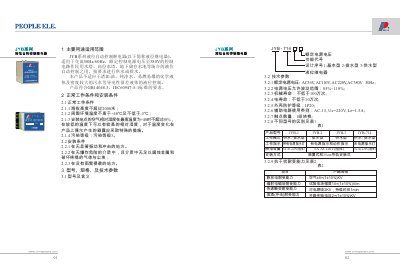
This manual describes the JYB-714 liquid level automatic control relay, a device used for automatic water‑level control in water towers and storage tanks. It outlines the relay’s operating principle, the three‑electrode detection method, and how the relay switches supply or drainage circuits based on liquid level.
The document includes detailed technical specifications, wiring diagrams for supply and drainage versions, installation dimensions, environmental limits, and maintenance procedures. It also lists the relay’s compliance with GB14048.5 and IEC60947‑5‑1 standards and warns against use with poorly conductive liquids such as oil or flammable chemicals. This manual is written in Chinese.
| Rated supply voltage | AC36V, AC110V, AC220V, AC380V 50Hz |
|---|---|
| Supply voltage tolerance | 85%~110% |
| Mechanical life | ≥ 1,000,000 operations |
| Electrical life | ≥ 100,000 operations |
| Ingress protection rating | IP20 |
| Auxiliary circuit category | AC‑15, Ue=220V, Le=1.5A |
| Contact quantity | 1 set (single changeover) |
| Maximum operating altitude | 2000 m |
| Operating temperature range | -5 °C to +40 °C |
| Maximum relative humidity at +40 °C | ≤ 50 % |
The relay can be powered from AC36V, AC110V, AC220V or AC380V at 50 Hz.
The mechanical life is specified as not less than 1 million operations.
The relay should not be used with oil, pure water, flammable or explosive chemicals, or highly conductive sewage.