
Technical manual for the ITW Finishing GFG PRO gravity spray gun, covering specifications, installation, operation, maintenance, and troubleshooting.
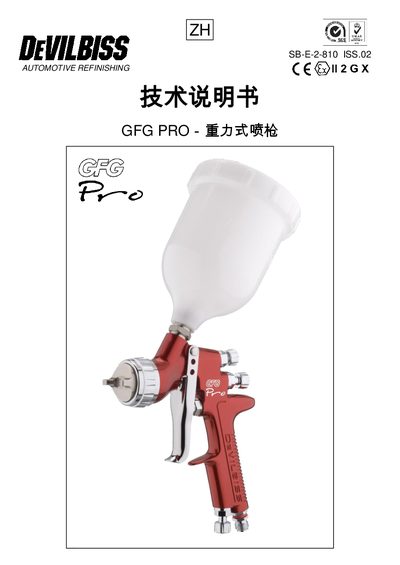
The manual provides detailed information on the GFG PRO gravity spray gun, including product part numbers, construction features, materials, and technical specifications such as air interface, pressure limits, and operating temperature range. It also lists the complete toolbox contents and a full parts list with exploded diagrams.
Installation, operation, preventive maintenance, cleaning procedures, and part replacement instructions are described step‑by‑step, along with safety warnings, troubleshooting tips, and warranty information. The document is intended for technicians and users who need to set up, use, and service the spray gun safely and effectively. This manual is written in Chinese.
| Air interface | Universal 1/4" BSP and 1/4" NPS |
|---|---|
| Maximum static air inlet pressure | 12 bar (175 psi) |
| Operating temperature range | 0 °C to 40 °C (32 °F to 104 °F) |
| Gun body weight (with pot) | 585 g / 768 g |
The maximum static air inlet pressure is 12 bar (175 psi).
Halogenated solvents such as trichloroethylene and dichloromethane must not be used because they can react violently with the aluminum components.