
This application note discusses characterization of lightning threats, RF transmission performance, and selection of protection alternatives for 4-6 GHz…
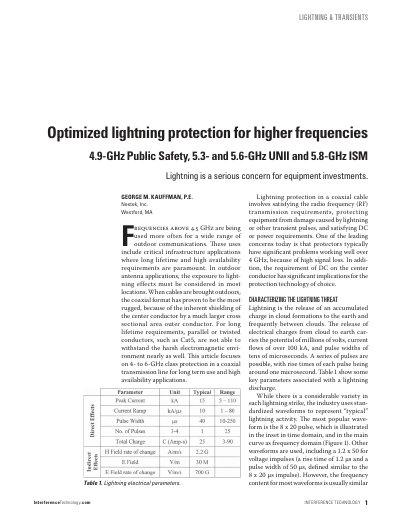
This document focuses on lightning and transient protection for coaxial transmission lines operating in the 4- to 6-GHz frequency range, addressing long lifetime and high availability requirements for outdoor communications. It highlights the challenges of protecting equipment from lightning effects while maintaining RF signal integrity and passing DC power on the center conductor.
The text characterizes the lightning threat using standardized waveforms like the 8 x 20 pulse and analyzes RF transmission performance metrics such as insertion loss and return loss. It details two main protection alternatives: RF-only solutions utilizing quarter-wave stub protectors and DC and RF solutions using Gas Discharge Tubes (GDTs), comparing their performance in terms of current capacity, let-through voltage, and insertion loss.
| Frequency Range | 4-6 GHz |
|---|---|
| Lightning Pulse Width | tens of microseconds |
| Lightning Rise Time | around one microsecond |
| GDT trigger voltage | about 600 V peak |
| GDT clamping duration | about 100 ns |
The most popular waveform is the 8 x 20 pulse.
They provide excellent protection in terms of peak current capability and reduction of the transient, with very little in-band energy content.