
A comprehensive guide to volumetric instruments from BRAND, covering glass manufacturing, identification, handling procedures for pipettes and flasks…
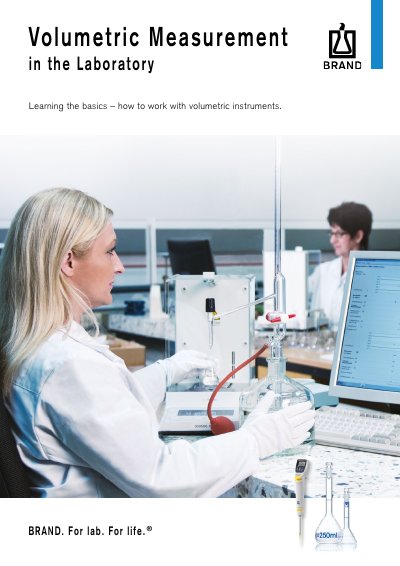
This document serves as an overview of volumetric measurement tools used in laboratory settings. It explains the classification of these instruments based on accuracy and proper usage techniques to ensure reliable measurements.
The guide details the manufacturing process of glass volumetric instruments, including the use of soda-lime and borosilicate glass, silk-screening calibration marks, and quality assurance standards like ISO 1769. It also provides specific instructions for handling various devices such as pipettes, burettes, and volumetric flasks.
| Reference Temperature | 20 °C |
|---|---|
| Glass Material for Bulb Pipettes | soda-lime glass (e.g., AR-GLAS®) |
| Glass Material for Volumetric Flasks | borosilicate glass (typically Borosilicate glass 3.3) |
| Maximum Heating Temperature | 250 °C |
'To deliver' means the delivered quantity corresponds to the capacity printed, while 'to contain' means the contained quantity corresponds to the capacity.
The standard reference temperature at which these instruments contain or dispense their volumes is 20 °C.
No, you should never heat volumetric instruments on a hotplate due to the risk of breakage from thermal stress.