
This manual introduces the features and characteristics of the Pupu kite product, including structure, performance, sound effect, shape pattern, workmanship, etc., as well as pre-flight preparation, basic operation, product specifications and other information.
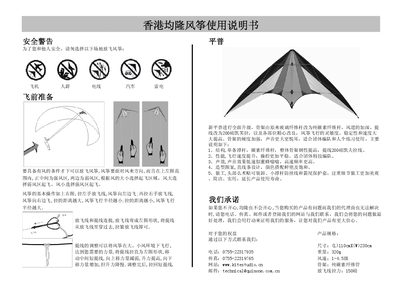
This manual begins with safety warnings and guidance on selecting a suitable flying site and wind conditions. It explains how to prepare the kite, adjust the tension line for different wind strengths, and perform basic flight maneuvers.
The document then details the upgraded Pingpu model, describing its carbon‑fiber frame, 200 lb Kevlar line, and improved performance. It lists the accessories included in the package and provides step‑by‑step assembly instructions, including rod connections, arrow‑tail attachment, and final checks before flight. This manual is written in Chinese.
| Size | 110 cm × 230 cm |
|---|---|
| Weight | 320 g |
| Recommended Wind Speed | 1–4.5 m/s |
| Frame Material | Pure carbon‑fiber tube |
| Line Strength | 200 lb Kevlar |
| Launch Line Pull | 150 lb |
Straighten the line, then move the short middle line upward to reduce lift for strong wind, or downward to increase lift for light wind.
The kite measures 110 cm × 230 cm, weighs 320 g, uses a pure carbon‑fiber frame, has a 200 lb Kevlar line, and is designed for wind speeds of 1–4.5 m/s.