
This document is a guide to birdwatching on the island of Fernando de Noronha, Brazil. It includes information on how to birdwatch, where to birdwatch, and what birds you can expect to see.
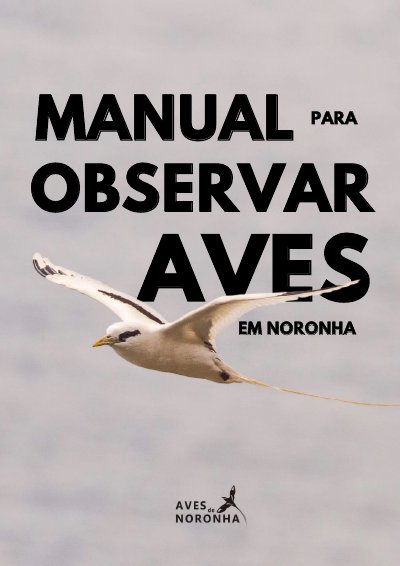
This guide, produced by the Projeto Aves de Noronha, introduces birdwatching ("passarinhando") on the Fernando de Noronha archipelago, which it describes as home to the greatest richness of seabirds in Brazil. It explains the basics of birds, their feathers, beaks and songs, and lists the most sought-after species such as the red-billed and yellow-billed tropicbirds, the Noronha vireo (sebito de Noronha), the brown and red-footed boobies (mumbebos) and the black noddy.
The guide maps observation points, trails and beaches around the island, from Baía do Sancho to Ponta da Sapata, and offers practical advice on equipment, clothing, group conduct and ethics around nests. It also covers migratory shorebirds, birds wearing bands, citizen science apps such as Merlin and BirdNet, and the work of the Aves de Noronha project since 2018. This manual is written in Portuguese.
In the first half of the year it can rain a lot, but the birds are breeding, which the guide calls a great party.
The guide recommends Merlin, to identify birds from photos and sounds, and BirdNet, to identify them from sounds.
Share the information with Aves de Noronha (@avesdenoronha) or enter it at www.bandedbirds.org, because band sightings help researchers describe migration routes.
The guide says to check in advance whether your activity needs scheduling with the ICMBio Visitors Center.