
This document provides information on drug-food/drug-herb interactions.
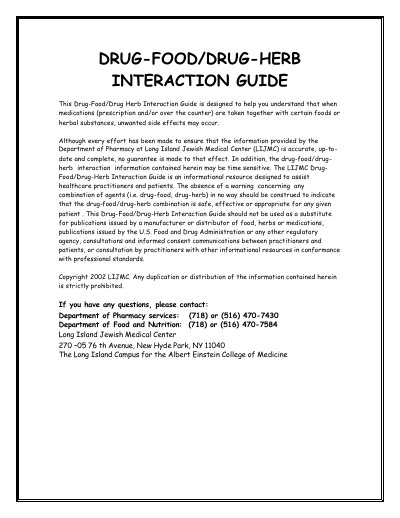
This informational guide is designed to assist healthcare practitioners and patients in understanding potential unwanted side effects when medications are taken with specific foods or herbal substances. It clarifies that the absence of a warning does not guarantee safety and should not replace manufacturer publications or professional medical consultation.
Antacids should be taken after meals to increase the duration of effect.
They are better absorbed if taken on an empty stomach one hour before meals or two hours after meals.
Grapefruit juice should be avoided as it can cause higher than desired blood levels of the medications, which may be harmful.
Ingesting alcohol with these medications can develop a severe reaction called a 'disulfiram reaction' characterized by flushing, vomiting, and fast heart rate.