
Rowan University Non-Hazardous Waste Disposal Guide introduces the definition, classification and disposal methods of non-hazardous waste.
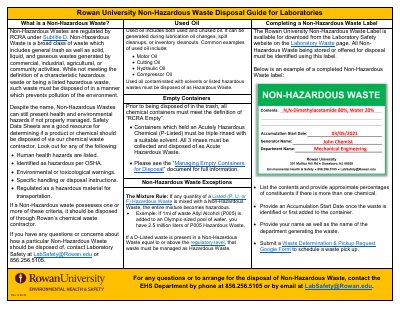
This Rowan University guide helps laboratories manage non-hazardous waste, a broad class that includes general trash and solid, liquid, and gaseous wastes not defined as characteristic or listed hazardous waste. Such waste must still be handled to prevent pollution of the environment.
The document covers used oil, completion of the Non-Hazardous Waste Label, RCRA-empty container requirements, and mixture-rule exceptions. Questions and pickup requests can be directed to Laboratory Safety or the EHS Department at [email protected] or 856.256.5105.
When it shows human health hazards, is identified as hazardous per OSHA, has environmental or toxicological warnings, includes specific handling or disposal instructions, or is regulated as a hazardous material for transportation.
Contact Laboratory Safety at [email protected] or 856.256.5105, or the EHS Department at the same phone number and email address.
They must meet the definition of “RCRA Empty”; containers that held acutely hazardous chemicals must be triple rinsed, with all rinses disposed of as acute hazardous waste.
The entire mixture becomes hazardous waste.