
This document is about AIDS, it introduces the current situation of AIDS and puts forward strategies to deal with AIDS.
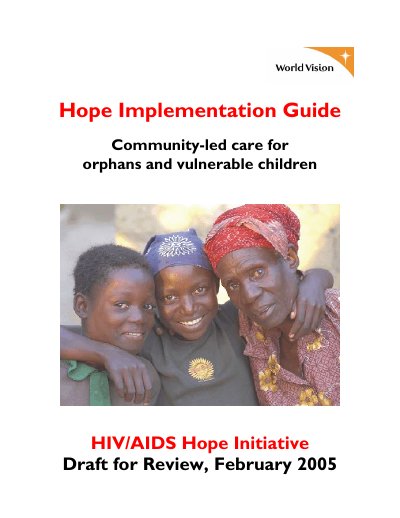
This draft guide from World Vision's HIV/AIDS Hope Initiative is intended to equip World Vision field staff to implement community-led care for orphans and vulnerable children more easily and effectively. It complements the World Vision ADP Toolkit for HIV/AIDS Programming and covers programming inside and outside Area Development Programs.
The guide addresses the situation of orphans and vulnerable children, World Vision's OVC response strategy, partners, program description, staffing, sample project start-up work plans, monitoring and evaluation, budgeting, references and resources, technical contacts, and sample forms.
It is intended to equip World Vision field staff to implement key elements of World Vision's HIV/AIDS response more easily and effectively.
World Vision can work within ADPs and outside ADPs.
An OVC is a child age 18 and under who has lost one or both parents from any cause, is HIV-positive, is living with a chronically-ill adult, or is living in a family that has absorbed orphans.